

Member Press Release
Improving biogas generation from food waste (from HRS Heat Exchangers)

By Matt Hale, Global Key Account Director, HRS Heat Exchangers
The recent news that there are now more than 300 biogas systems in the U.S. converting food waste into renewable energy1 is great news, not only in terms of reducing emissions, but also for waste management, sustainable agriculture and soil health.
As the American Biogas Council (ABC) points out, ‘While prevention remains the best strategy to reduce wasted food, biogas systems help ensure the food that still gets discarded is used productively.’ Unlike other forms of renewable energy, biogas is extremely flexible and ‘can be used to power and heat homes, fuel vehicles, or generate electricity through engines and fuel cells.’
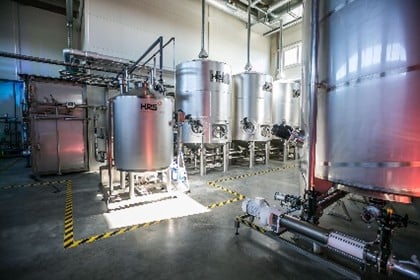
Overall anaerobic digestion (AD) systems in the U.S. currently ‘recycle 12.8 million tons of food scraps and other organic waste into over 35 billion cubic feet (Bcf) of biogas a year, enough to cover the year-long energy use of 283,000 U.S. households.’ However, ‘if three-quarters of the discarded food from homes, grocers, restaurants, and food processors were recycled in biogas systems, we could turn that wasted material into 115 billion cubic feet (Bcf) of biogas per year, equivalent to the energy needs of nearly one million U.S. households.’
But increasing capacity is only part of the challenge. Maximizing AD plant efficiency and ensuring that the valuable digestate produced has the greatest value, are key to delivering a thriving and successful biogas industry.
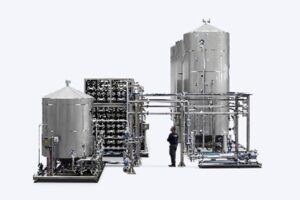
Of particular benefit for plants treating food waste is the HRS Digestate Pasteurization System (DPS), which has been installed in biogas plants across the globe. The HRS DPS is capable of pasteurizing digestate, feedstocks, and similar materials pre-or post-digestion, allowing operators to maximize the efficiency of their overall process while meeting regulatory (Class A biosolids) and customer requirements so that digestate from food treatment plants can be used as fertilizer. Its continuous process is simpler than single tank options and provides up to 70% heat regeneration, making it extremely energy efficient.
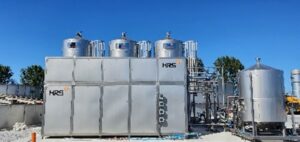
For more information on the HRS DPS, and our other systems to improve the efficiency and operational life of anaerobic digestion plants, please contact us today.
About HRS Heat Exchangers
Located in Georgia, HRS Heat Exchangers is part of the EIL Group (Exchanger Industries Limited) which operates at the forefront of thermal technology. HRS offers innovative heat transfer solutions worldwide across a diverse range of industries. With more than 40 years’ experience in the anaerobic digestion and biogas sector, specializing in the design and manufacture of an extensive range of turnkey systems and components, incorporating our corrugated tubular, and scraped surface heat exchanger technology, HRS products are compliant with global design and industry standards. HRS has a network of offices throughout the world: Australia, Canada, UK, Spain, USA, Malaysia, and India; with manufacturing plants in India, Spain, and Canada.
www.hrs-heatexchangers.com
Email for publication: info@us.hrs-he.com
For media enquiries about HRS Heat Exchangers please contact FastLoop Media: marketing@hrs-he.com
Bev Small, FastLoop Media
T +44 (0) 7901 841491 E bev@fastloopmedia.com