
From fragmentation to industrial scale: reflections from the Budapest Biogas Summit
 By Charlotte Morton OBE, Chief Executive, World Biogas Association
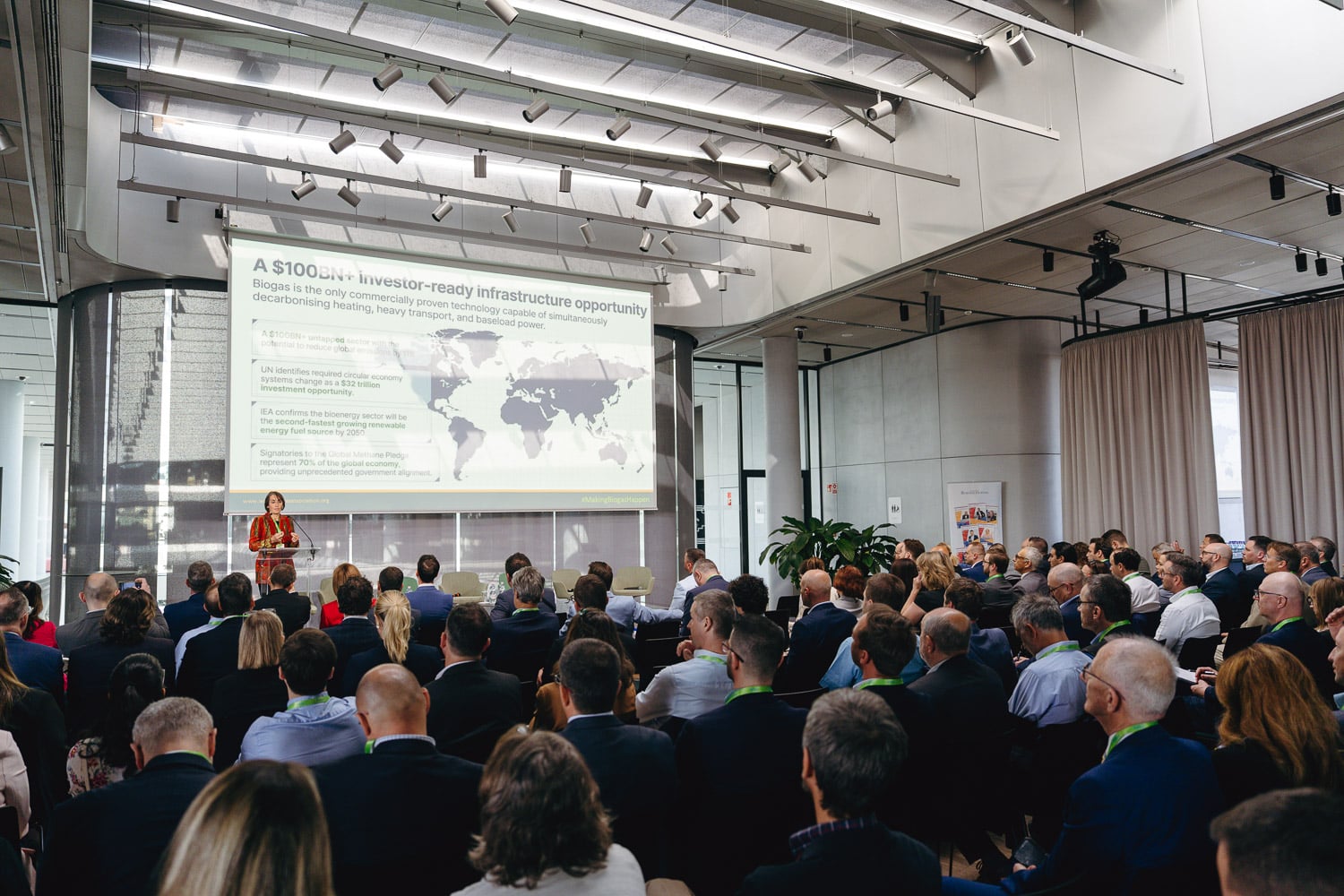
Speaking at the Budapest Biogas Summit on 8 May was a timely reminder of both the extraordinary opportunity in front of our sector and the urgency with which we must act to realise it.
The global biogas and biomethane industry stands at a critical inflection point. Policy ambition has never been stronger, investor interest is growing, and the climate, air quality and energy security benefits of biogas are now widely recognised. Yet deployment continues to lag far behind the scale required. My key message in Budapest was simple: we must move from fragmented growth to true industrial-scale delivery.
Globally, humans generate over 105 billion tonnes of organic waste every year – enough energy to displace around one third of today’s fossil gas demand. Yet an astonishing 98% of this waste remains untreated. At the same time, biogas remains one of the only commercially proven solutions capable of simultaneously decarbonising heat, heavy transport and baseload power, while delivering circular economy and public health benefits.
This represents a $100 billion-plus, investor‑ready infrastructure opportunity, with emerging markets expected to drive the majority of future growth. However, despite strong capital appetite, too many projects struggle to move from development to delivery. Regulatory friction, fragmented supply chains and the lack of global standardisation all erode returns, slow deployment and ultimately restrict investment.
This is precisely why the World Biogas Association (WBA) is driving the #MakingBiogasHappen(MBH) programme. MBH is about building the institutional architecture needed to turn global ambition into on‑the‑ground reality. Through regulatory de‑risking, technical standardisation, professional certification, robust carbon accounting and scalable project pipelines, the programme is designed to support repeatable, portfolio‑scale deployment – ensuring that every biogas plant is a high‑performing, investable asset.
 I also shared some of the exciting progress we are making in India, where organic wastes could theoretically displace the country’s entire fossil gas consumption, while tackling significant environmental and public health challenges. At both national and state level, we are working with government and industry partners to create aligned, actionable biogas strategies that can be replicated at scale.
I would like to thank the organisers for bringing together such a committed and knowledgeable audience, and for creating the space for honest conversations about what it will take to unlock the sector’s full potential.
The momentum is clear. Now is the time to move faster.
I look forward to continuing these discussions at the World Biogas Summit & Expo in Birmingham this July, and at the World Biogas Association India Congress in Delhi this October, as together we work to make biogas happen – at scale.