


HRS Digestate Pasteurisation System (DPS) for Ecogas Reporoa, New Zealand
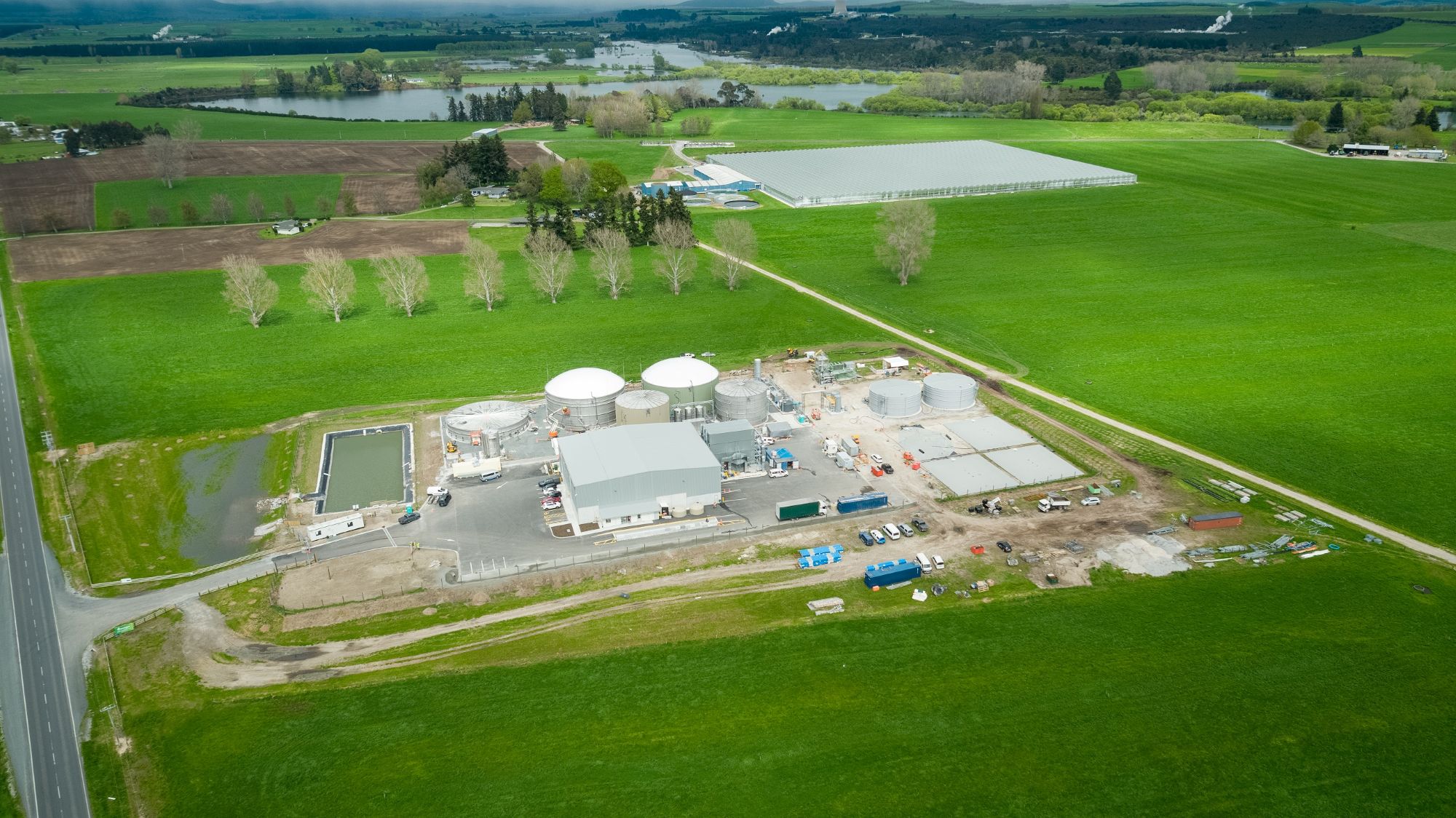
Deployment / Application site
- Reporoa, in the middle of the North Island, New Zealand: New Zealand’s first full scale energy plant powered by food waste
- Client: Ecogas
- The HRS DPS was installed in February 2022, and the site was officially opened in October 2022
Overview of the case study
The co-mingled food waste used as feedstock at Reporoa has the potential to contain organisms which have the potential to impact human, animal, or plant health. The HRS Digestate Pasteurisation System (DPS) pasteurises the digestate produced at the plant prior to use to render such pathogens inert, along with other undesirable elements such as weed seeds. This means that the valuable and sustainable biofertiliser can be safely used by farmers and growers.
Description of solution or innovation
Traditional pasteurisation systems heat the digestate in a tank using a heating jacket – a bit like waiting for a giant kettle to boil – and then dump the heat after it has served its original purpose. The HRS system, however, employs energy recovery and is typically two to three times more efficient. By transferring energy from the hotter (pasteurised) sludge to the colder (unpasteurised) sludge, energy consumption is reduced, and the need for additional heat sources is removed.
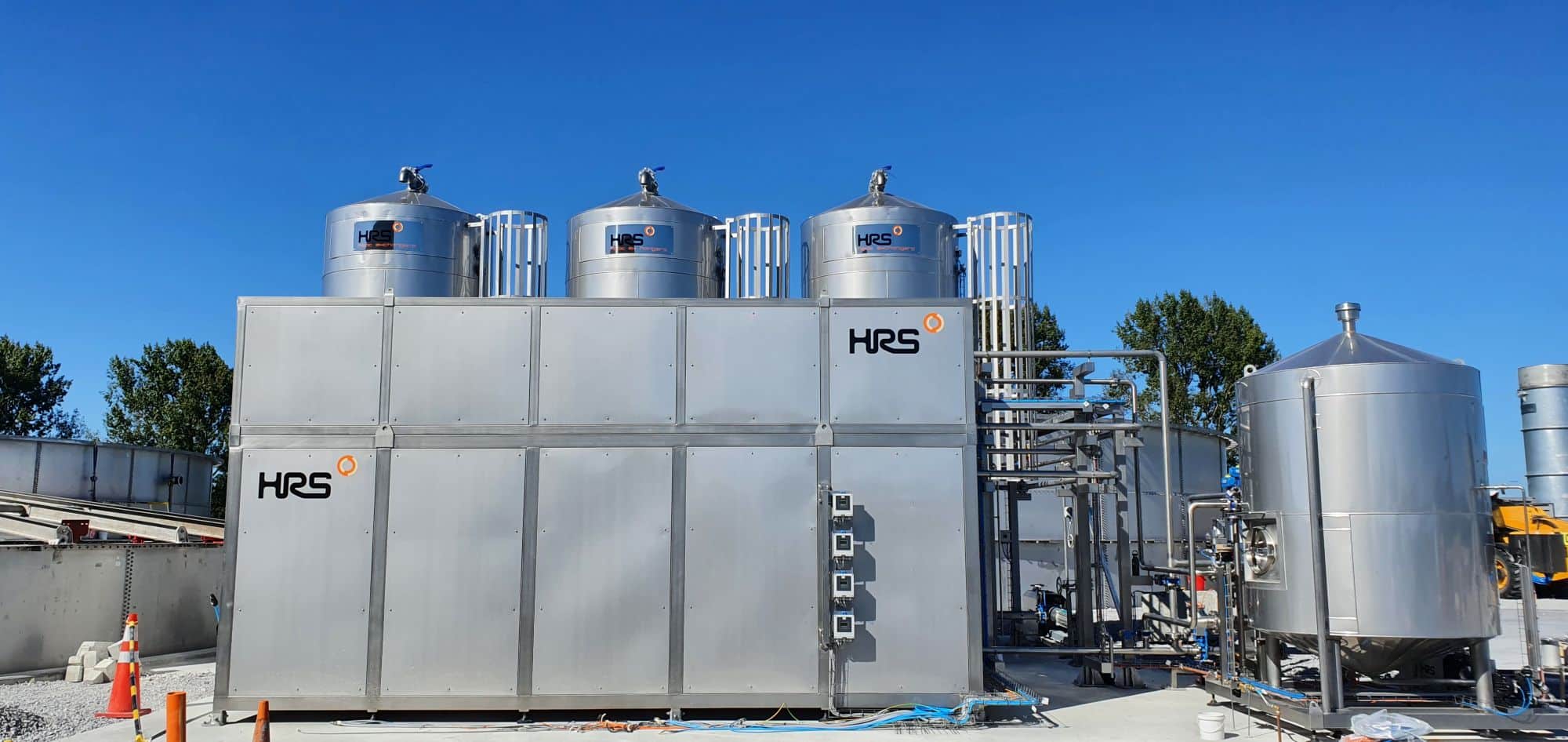
The HRS DPS utilises ‘waste heat’ from the site based Combined Heat and Power Plants (CHP) to heat digestate to >70 °C and hold it for one hour at this temperature, before cooling. This is done with the HRS DTI Series heat exchangers, which are designed in such a way to recover up to 70% of the heat energy required for the process. The tube which carries the digestate through the system’s heat exchanger features a unique corrugated design; unlike the smooth or dimpled tubes used in alternative exchangers. This boosts heat transfer by creating extra turbulence and helps reduce fouling, resulting in less downtime and maintenance, and increasing the system’s lifespan.
The fully automated system provides an auditable kill-step for efficient and effective reduction of pathogens such as Salmonella, Staphylococcus, E. coli etc. Once treated in this way, the digestate produced is safe biofertiliser product, turning what would otherwise be a waste stream into a value-added organic substitute to mineral fertilisers. Not only does the DPS heat-treat the digestate, but it also helps to remove odours while maintaining the quality of the resulting biofertiliser.
Technical specifications
The HRS DPS at Reporora is capable of treating up to 12 tonnes of digestate per hour, using hot water (at 85°C) from the site’s combined heat and power (CHP) unit. In its first year of operation, the facility produced more than 16,000 tonnes of Fertify™ Regenerative Fertiliser for use on local farmland.
Operational performance and results
Using the HRS DPS ensures that the digestate produced is compliant with UK-based PAS110, an industry specification against which producers can check that digestates are of consistent quality and fit for purpose.
Testimonial or user quote
Alzbeta Bouskova, General Manager at Ecogas explained why the company chose to use the HRS DPS system:
Ecogas adopted UK-based PAS110 digestate standards as our primary design and operation principle to ensure that the biofertiliser produced from the Reporoa facility is of the highest quality, safety and value for the potential users. Pasteurisation is a key step in the PAS110 standard for source-separate food waste for destroying pathogens and viruses potentially present in this type of waste.
“The Reporoa plant is the first of its kind in New Zealand, and with that comes the process of introducing our new biofertiliser product, Fertify™, to the farming and horticulture sector. We know that brand trust is hard to earn but easy to lose with the community and we have no room for mistakes. We chose HRS based on their reputation and strong track record in digestate pasteurisation. This was further supported by the highly engaged local HRS team, who worked hard to meet their timelines and quality of the equipment and installation.”
Environmental and economic impact
The Ecogas Reporoa plant processes around 75,000 tonnes of organic waste each year from council kerbside collections, commercial and industrial food producers – eliminating more than 11,000 tonnes of CO2 a year and helping towards New Zealand’s target of being net carbon zero by 2050.
Future potential or plans
HRS equipment is installed at more than 200 biogas plants worldwide, helping operators to improve their efficiency and overall operation. These include a number of DPS systems including some in the UK and across Europe
About HRS Heat Exchangers
HRS Heat Exchangers operates at the forefront of thermal technology. HRS offers innovative heat transfer solutions worldwide across a diverse range of industries. With more than 40 years’ experience in the anaerobic digestion and biogas sector, specialising in the design and manufacture of an extensive range of turnkey systems and components, incorporating our corrugated tubular and scraped surface heat exchanger technology, HRS products are compliant with global design and industry standards. HRS has a network of offices throughout the world: Australia, Canada, New Zealand, UK, Spain, USA, Malaysia and India; with manufacturing plants in India, Spain and Canada.