COP31 ZERO WASTE ACTION AGENDA
COP31’s Zero Waste and Methane Reduction Action Agenda is calling for solutions to the growing problem of waste methane emissions.
WBA and its members are delivering them to the Presidency of COP31. Join us in #MakingBiogasHappen at this critical moment.
About COP 31
COP31’s Zero Waste and Methane Reduction Action Agenda puts waste-sector methane reduction onto the mainstream climate implementation agenda, with a focus on preventing waste, diverting organic waste, addressing legacy emissions from landfill, scaling circular-economy solutions and integrating waste methane into national climate plans.
WBA has been actively engaged with developing the Zero Waste agenda and has developed this forum to present solutions to the world’s growing waste problem. Now is the time to join the world in #MakingBiogasHappen
If you want to engage with WBA’s COP31 Zero Waste Action Agenda with a case study or op-ed, contact jhughes@worldbiogasassociation.org
Why COP31 could be the biogas sector’s defining moment
A business appraisal of the opportunities arising from Antalya 2026
When world leaders gather in Antalya, Türkiye, this November for COP31, the agenda will look different from any previous UN climate summit. Türkiye’s presidency has placed waste – and specifically the methane it generates – at the very top of its action agenda. For the biogas sector, which has spent years making the economic and environmental case for turning organic waste streams into usable energy, this is not a marginal policy shift. It is the kind of institutional alignment that changes markets.
The question for businesses is how quickly they can position themselves to take advantage of it.
Organics diversion – optimising waste resources and methane reductions
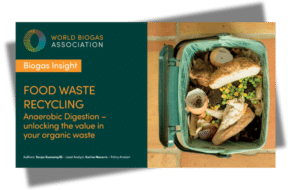
The COP31 Zero Waste Action Agenda places emphasis on reducing waste-sector methane emissions, diverting organic waste, addressing emissions from existing landfills and incorporating waste methane reduction into national climate plans (NDCs). These ambitions recognise that how we manage waste is fundamental to tackling climate change, improving resource security and protecting the environment.
Anaerobic digestion is recognised as the most cost-effective, high-impact method of optimising organic waste resources and delivering methane reduction. In this WBA Biogas Insight, we consider its impacts, the business case and action agendas for organics diversion.
Organics diversion – an action plan for tackling methane emissions from waste
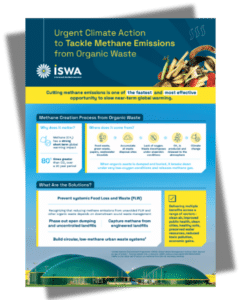 Methane reduction is one of the fastest ways to slow near-term global warming, much of which can be avoided using proven technologies and practices.
This infographic outlines three priority actions from the UN Secretary-General’s Call to Action on Methane: ending open dumping and uncontrolled landfilling, capturing methane from waste and wastewater, and developing circular, low-methane waste systems. It answers the question: what can I do now to reduce methane from waste?
Landfill Gas Position Statement by WBA
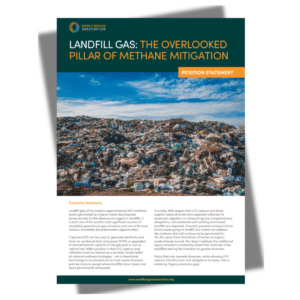
Landfill gas (LFG) is both one of the world’s most significant sources of avoidable greenhouse gas emissions and one of its most mature, investable decarbonisation opportunities. Captured LFG can be used to generate electricity and heat via combined heat and power (CHP) or upgraded to biomethane for injection to the gas grid or use as vehicle fuel.
WBA’s position is that LFG capture and utilisation must be treated as a permanent, funded pillar of national methane strategies – not a transitional technology to be phased out as food-waste diversion policies mature. Crucially, WBA argues that LFG capture and food/organic waste diversion (via separate collection to anaerobic digestion or composting) are complementary obligations, not substitutes.
Landfill Gas Solutions
Assessing the role of landfills in Europe’s climate objectives
Conducted by Veolia, SUEZ and Waga Energy, this study examines how non-hazardous waste landfills can contribute to greenhouse gas emission reduction and renewable energy production objectives in Europe. Building on the existing regulatory framework, which aims to reduce the amount of waste sent to landfill, the analysis evaluates the additional environmental benefits that can be achieved through improved landfill gas management practices.
Case Studies
Waga Energy is a specialist landfill-gas-to-biomethane company that develops, finances, builds, owns and operates facilities using its proprietary WAGABOX® technology to upgrade landfill gas into grid-quality biomethane. WAGABOX units operate worldwide through long‑term partnerships with landfill owners and energy offtakers, helping expand access to clean, local renewable energy.
Contact us
Attending COP31 or related events in Antalya? Charlotte Morton OBE, Chief Executive, and Giulia Ceccarelli, Head of External Affairs, will be representing WBA and connecting with policymakers, industry leaders and partners from across the global biogas community.
Get in touch with us at info@worldbiogasassociation.org to arrange a meeting with the WBA delegation and explore opportunities to connect and collaborate.